I recently had a little exchange with with a well known aviation youtuber. In one of his videos, he said that, on average, his students go solo at around 20-25hrs. What?!
I commented that I knew people who were ready to solo at around 13-16 hours, in the UK, and asked if there is a different system in his country. His response was that it is “dangerous” to compare hours to solo and that he would prefer to share the skies with someone who had more hours. #Shade!
In case it needs to be said, I actually like his videos. They are great quality and they’ve helped me a lot. So, this blog is not about putting him down, it’s more about considering and criticising his comments.
#SoloBy30
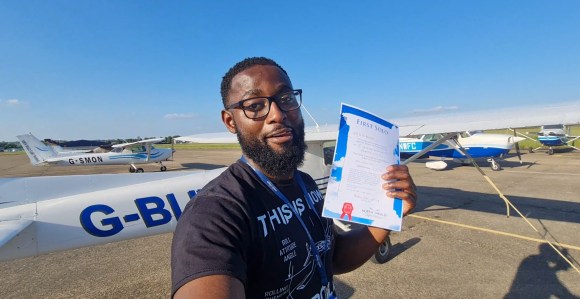
I’m the perfect example of the kind of student who was ‘worried’ about his first solo. A couple months ago, I set a goal to solo before my 30th birthday. As a result, I started a Go Fund Me campaign and was able to raise £1180.72 towards it.
I’m pleased to announce that, although I didn’t solo before my 30th birthday, I did solo on my birthday week. It was an incredible experience! For more on that, subscribe to my YouTube channel. The video will be out on 17th July 2021.
What is George Saying?
For the purposes of this blog, I’m going to refer to the youtuber as George (hopefully there isn’t a prominent aviation youtuber called George lol).
I was taught that a good way to think something through is to outline as strong an argument as possible for the opposing viewpoint. So, I’m going to steelman George’s argument to see whether I have any counter-arguments left.
George was making the point that it is dangerous to compare the hours by which you solo, because it can be unnecessarily discouraging to those who take longer to solo. Some students may be so down on themselves, so much so, that they quit flight training altogether.
Alternatively, students worrying about their solos may put undue pressure on their flight instructor to let them solo, before they are ready. As a result, something may happen during their first solo, for which they are unprepared, causing them to crash and die. That would be tragic and is worth preventing!
We are all different and we learn at different speeds. We all bring different skills and qualities into flight training. Consequently, everyone’s progress through flight training will look different.
Every student should simply take every lesson as it comes, trusting that their qualified flight instructor is skilled and knowledgeable enough to know when they are ready for their first solo.
In addition, even if it were to take the student more hours to solo, at least they would have more experience and therefore, they would, more likely, be a safer pilot.
Why I Still Completely Disagree
Firstly, does more flying hours automatically equate to a higher level of proficiency? Not necessarily.
Secondly, the fact that George decided to mention that students solo at around 20-25 hours opens it up to comparison. If he did not want people to compare hours, he shouldn’t have contributed to what he sees as a ‘problem’, by offering up that statistic. He should have just said, “students solo when they are ready”. Simples. No? 🤷🏿♂️
Thirdly, no student can solo before their instructor allows them to. It is the job of the flight instructor to make sure that the student is adequately skilled and in the right frame of mind to fly solo, as ‘pilot in command’.
If the flight instructor doesn’t have the testicular fortitude to say “not yet” to a student who isn’t ready, perhaps they should consider a different line of work. As such, how the flight instructor responds is far more important than what the student thinks or feels.
Fourthly, people like me, who are determined to realise their dream of becoming a pilot despite very limited financial resources, have to be incredibly efficient. Being efficient doesn’t mean cutting corners. It means that I want to learn all the skills I need to learn to be a pilot, as well as I can, and as quickly as I can, thereby, spending as little money as possible.
If I had all the money in the world, I’d be happy to never think or “worry” about my solo. That way, George could simply continue to cash-in on my lessons through instructor fees, as well as monetising the videos on Patreon and Youtube. 🙄 tut tut!
Last, and by no means least, George’s argument, has no consideration for the positive side of comparison. There is such a thing as “healthy competition”. It has driven much of our advancement and achievement as human beings.
I felt rather strongly about going solo as quickly as possible. That meant I turned up well read, on the theoretical aspect of the lesson, to the point that I could have briefed my instructor on most days (instead of the other way around).
That same desire led me to practise each manoeuvre, over and over, on my flight simulator, in the lead up to each lesson, until I grew comfortable with it.
I watched YouTube videos to learn as much as I could, vicariously. I looked like an idiot in public, armchair flying whenever I could, ahead of my lessons. I reviewed video footage from all my lessons and kept a diary of what I needed to improve and how I could improve on it.
I turned up to lessons with equipment that my instructors never even told me that I needed. How did I know I needed it? Because my desire to solo as quickly as possible made me take responsibility for my progress, which led me to research more broadly and accept advice from other pilots and flight instructors.
When I messed up my circuits, due to being unprepared for the opposite runway, I sentenced myself to doing 100 circuits on the flight sim. That virtually took all day. 100 x a 5-minute circuits = 8 hrs+, as a conservative estimate. Believe me when I tell you, I was ready for any runway by the time my next lesson came about.
In Conclusion
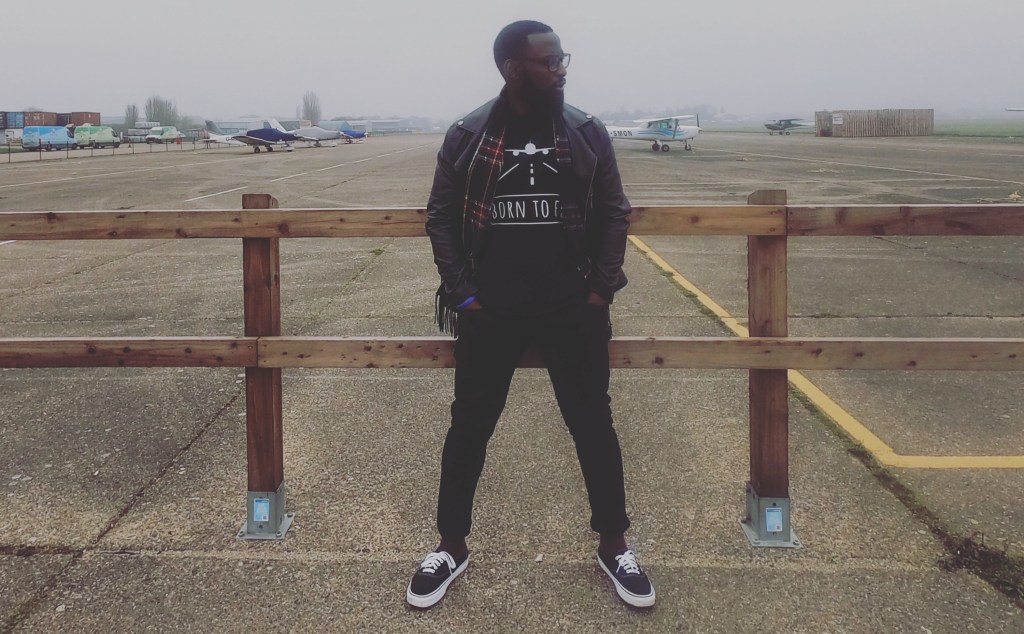
I have to admit, the more I think through it, the more George’s statement seems somewhat ignorant and, at the very least, doesn’t apply to someone like me.
For now, I’m glad that I “worried” about getting my solo done. That itchiness to solo gave me the motivation to plan ahead and work as hard I possibly could, to make it happen.
As George said, in his response to me, the norm is to solo “when you are ready”. Well, I was ready at just under 14 hours of flying lessons (+ 3 trial flights) and I’m damn well proud of that!
I actually asked George, in my comment, if there was a difference of approaches where he instructs. I just couldn’t understand what he does with his students for the additional 17 hours it took them to solo, in some cases.
I was hoping he would outline his approach in a way that was more useful. If he does something my instructor hasn’t done with me, I’d want to know. Afterall, it is my aim to be the best pilot I can possibly be, irrespective of how many hours I have in the logbook.
Regardless, George is a great youtuber. From the little I’ve seen, I’ve always thought he is a great instructor, and everyone I’ve ever spoken to about him thought so too.
Who knows?! Maybe one day I’ll meet him and we’ll hash it out, if it is still relevant and useful to do so. Anyways, a lot has been said. Now, I retreat, to reflect.
What do you think? I’m genuinely curious. In particular, I would like to learn of counterarguments I haven’t considered as yet. Please drop your thoughts in the comments section below.
After all, it is when we are wrong – when we fail – that we truly learn the most. Failures reveal what we haven’t yet learned. Learning makes progress possible. Progress is the best any of us can hope for. Speak your mind!

For more on how I’m getting on with learning to fly, check me out on the YouTube.👊🏾
👉🏾YouTube👈🏾
👉🏾Instagram👈🏾
👉🏾LinkTree👈🏾
 Future Pilot Niner One